

Anyone who has read my writings in articles and posts on social media knows that I rant and rage over the misinformation in which we base our understanding of addiction. I do so because I have witnessed, and personally felt the damage these misunderstandings have done to people in our society. I also have misunderstood addiction for far too long in my life and regrettably there is damage that I must take responsibility for – on a few different levels professionally and personally.
It is really only recently, in context with my journey, that I have begun to unpack everything I thought I had ever known, by unpacking what the world thinks it knows about addiction. My journey continues to reveal the most profound insights, myths, truths, perceptions, opinions as I search both inwardly and outwardly for some sense, some meaning, some purpose in what is likely the most overshadowing social, medical and psychological phenomenon in our world today and throughout all of history I have discovered.
I want to focus on what we think we know about treatment for substance use issues. I will briefly fly through a history of many different mindsets from which many different approaches to “treatment” have sprung. I do this because as someone who has used substances and struggled, helped others through the same and helped families supporting loved ones, the main go to for everyone in my experience has been “I need treatment” or “send them to treatment” “That’ll fix me/them”. And then we’re left with an unexpected fall out, trying to understand why this does not fix anything the way we expected it to.
The most horrific and impactful damage that has occurred from our misunderstanding of addiction is that of stigma. From this stigma we have forged social attitudes and policies from our own family kitchen tables, to treatment models, to the policies and laws that govern what kinds of substances we can and can’t use. We have confused and corrupted our ways of managing addiction. We have confused and corrupted caregiving and treatment for those who have problems. We resort to punishment. We ignore and are confused about the economic dependence on a black market and its tributaries. We’ve even turned “treatment” into a cash industry both publicly and privately where fiscal responsibility is paramount over humane wellbeing. We have created a “story of addiction that has persistently reflected broader questions of what it means to be human and care for one another”. (Fisher, 2022)
So I will use terminology interchangeably in an attempt to minimize any stigmatizing language that contributes to and reinforces the misinformation we have based our beliefs of addiction on. As noticed, I will use the term “addiction” from time to time as its definition can be expanded beyond substance use to many other behaviours and thought patterns we may engage in. I will commonly use “substance use” as it is a term that, to me anyway, reflects the reality that most of us use substances without negative consequences or “symptoms” of substance use disorder. I will use the term “substance use issues” to broadly describe addiction, disorder, illness, negative impact and consequences. I do this because despite our current understanding, seeing addiction as a disease, a disorder, a choice, a habit and so on is only seeing it through restrictive lenses we have tried on through the ages, as I hope to show here. Mostly I use these terms to help challenge and clarify our various misunderstandings of addiction.
So here goes…
As a counsellor, I had the privilege and responsibility of assisting others in their journeys with mental health and substance use for over 32 years. I heard from thousands of people who use substances and from other peer professionals on the effectiveness and/or the lack thereof of a number of different treatment approaches. The most common approaches being the 12 step/model, the Biopsychosocial model, Cognitive Behavioural Therapy, Mindfulness Relapse Prevention, the SMART Program, Narrative Therapy, Brief Solution Focus, and many other therapies that have had their day in the sun. An important mention here, is that of Harm Reduction, of which I will expand on a bit later. After learning and practicing many of these therapies in structured and often certified environments, there was something that was just not adding up for me throughout my career. I needed to learn more. I need something new and different. I needed something outside of the cage we have built around us.
Enter Johann Hari and his book “Chasing the Scream: The First and Last Days of the War on Drugs” (Hari, 2015). This completely made my jaw drop and look at the work I thought I was doing so accurately well. His famous quotes “Everything you think you know about addiction is wrong” and “The opposite of Addiction is not Sobriety, it’s Connection” (Hari, 2015) slapped me in the face. After all this time and training, could I possibly not know what addiction was? What did it mean that connection, not sobriety was the golden goose we are supposed to be looking for? I started looking into this “fool” by looking at the most recent and evident research and lo and behold…. For me the rest is history.
What I knew over those years was that “success” was about personal fit, small steps, and not necessarily about abstinence. Abstinence is an objective for many, including me, but one that may or may not be reached depending on a lot of things.
Not achieving or maintaining abstinence doesn’t mean that success has not been achieved. I hope I raised a few eyebrows with that statement.
What I have also learned is that of the myriad approaches, beliefs, mindsets, and therapies, each were claiming to be the “one”. And of course, there is the perceived be all end all 12 step program which, while very effective for some, is not for everyone, just like many other approaches. Yet claims are made in 12 step as well as other programs that if it doesn’t work for you, there is something about you that isn’t right and/or you’re just not ready. But what is it that constitutes “it works”?
Johann Hari’s book validated what I was already feeling and what I intuitively knew.
According to many authors and articles, treatment for addiction has taken many forms. Probably because there has never been nor is there a consensus on what addiction is and what causes it. To this day, the jury is actually out on identifying any one cause. However, as we hopefully can see, there are many things to consider about what causes addiction.
Let’s have a quick look see:
Aristotle saw addiction as an “incontinence of will” and a “character flaw” (Franzwa, 1998), basically as a moral failing overall. That carried into the 18th and 19th centuries as addiction continued to be viewed as a “moral affliction” and was suffered by people with “poor character”. (Canada Drug Rehab, 2018) A moral failing; Major personal shortcomings. Terms we still hear today.
In 1600, reinforcing the moral failing concept, in the Ottoman Empire anyone caught smoking (yes tobacco) would be sentenced to decapitation. Around that time in Russia they would just cut your lips off. In Egypt, teeth were removed as a punishment. (Sandhu, 2022) (Fisher, 2022) Fair and just punishment…wait what??, I smoked for 37 years before I quit! Geez! Glad that my head, lips and teeth are intact.
In the 18th century strategies to cure people from addiction would include flogging, bering forced to puke, “bloodletting” and cold water baths. Shame and guilt were key emotional tools in “motivating” people in treatment. (Sandhu, 2022) (Fisher, 2022)
In the 1900’s treatment “solutions” would be dependent on social status. The poor went to jail, asylums and almshouses. The rich would be confined to their homes or access private “treatment” that seemed to provide medication along with other treatment. It all sounds like a Dickens novel.
While the concept of addiction as a disease was considered centuries before, in the early 1800’s the “Father of Psychiatry”, Benjamin Rush actually named chronic drunkenness a disease (Fisher, 2022).
In 1935 AA evolved from the “Oxford Group”; a very Christian organization addressing addiction. Alcoholics Anonymous drifted from that group and adopted the disease concept while holding on to much of the religious and moral underpinnings it was born from. The Minnesota Model evolved from the Hazelden Institute in the 1950’s and established actual structured treatment programing using AA and the 12 steps as the primary approach. (Canada Drug Rehab, 2018) It of course supported that addiction was a disease while still embracing a religious and moral foundation. Thus, as it was officially considered a disease, health insurance companies were willing to fund treatment for a 28 day period (khn.org)
Given the embracing of the disease concept, curiously enough, the 12 step program is focused on more moralistic and religious solutions, the ultimate being surrendering to a higher power as well as focusing on personal shortcomings or faults or weaknesses. There is some token mention of medicine and science but this seems underplayed. The Big Book is considered the text book for 12 step. There are many claims in that book that, while at the time seemed to make sense, have since been disproved. One such claim is that of alcoholism being an allergy. That has since been proven false. And of course, the disease concept is being challenged by recent research and studies. Rightly so. Science naturally evolves and doesn’t remain stagnant.
Despite the antiquity of the program and the inaccuracies that it argues, it has proved effective as a program that provides the necessary connection with others who are struggling. (Remember the opposite of addiction is not sobriety but connection). The inner work done is just like the inner work done in most every other existing program as well. It’s 12 steps, while religious in context, are akin to steps and strategies provided in many other models. There is a quote used often in the readings that the program “works if you work it”. This is fortunately true of all of these programs. I would add, if the program(s) fit, the work is more likely to get done.
The disease concept evolved through research at the National Institute for Drug Abuse and was labeled a Brain Disease in the 1980’s. Both establishing the disease concept then this research from disease to brain disease reinforced the transition from the centuries long view that addiction was a moral failing and now we could look at it as a health issue.
Scientific research with rats was able to shed light on how neuro transmitters such as dopamine and serotonin play huge roles in brain functioning. A rat would be isolated in a cage and offered the choice between two water bottles, one filled with a substance such as cocaine and the other just regular water. It wasn’t long before the rat would only drink from the one containing the substance and would die. This was a huge breakthrough in determining the changes in the brain due to substance use and their chemical reactions.

Despite the embracing of this evidence and the disease concept, the concept remains extremely limited today. And almost all programs related to the 12 step or faith based approaches continue to focus on personal failure, shortcomings, sin and bad behaviour. Confession, making amends and helping others seems to be the go to silver bullets in these programs. Remaining accountable for behaviour and helping others are natural and crucial in human interactions. And so they are crucial in recovery. But they are not the be all end all for addiction. There is so much more that we are not addressing.
Further looking into what causes addiction and how it should be treated we look at the early 20th century. Sigmund Freud thought of addiction as caused by childhood trauma. (Canada Drug Rehab, 2018) More recently Dr. Gabor Mate, a prominent and influential educator in addiction today is a strong advocate regarding trauma, particularly childhood trauma as a cause of addiction. He has even produced a movie “The Wisdom of Trauma” that speaks to this. Understanding the role of adversity and trauma in childhood and during a lifetime can help us to move away from a moral cause to a more external perspective impacting the internal.
Bruce Alexander created the Rat Park experiment at Simon Fraser University. He argued that the rat in the previous experiments were removed from their natural habitat and resources and place in isolation, and that this was the cause for the propensity to seek out the tainted water. His experiment showed that rats indeed rarely went to the tainted water when allowed to live and play in their natural state.
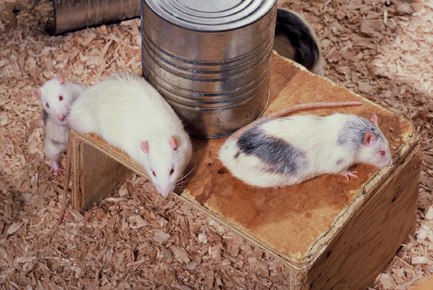
From this Bruce has developed the Dislocation Theory of Addiction and written about it in his book “The Globalization of Addiction: A Study in Poverty of Spirit”. Bruce argues that drugs themselves are not the cause of addiction but rather his theory explores that displacement, dislocation and isolation is the root cause of addiction (Alexander, 2008) . This theory seems to move us from a personal moral failure and point of view and the disease concept to a social failure perspective.
Marc Lewis argues against the disease model. He doesn’t reverse back to the moralistic or “its a choice” model but moves in another direction regarding the research done with the brain. He argues that addiction isn’t a disease but rather is the “motivated repetition of the same thoughts and behaviours until they become habitual”. (Lewis, 2015) In other words a “wiring” of pathways of learning in the brain. In my opinion this expands on the brain research that has been done and further supports the role of the brain, nervous system in addiction. It includes the role of neuroplasticity and what is commonly referred to in many addictions treatment models as the “rewiring of the brain”. Thus, not a disease.
In her book “The Unbroken Brain: A Revolutionary New Way of Understanding Addiction, Maia Szalavitz argues, similarly with Marc Lewis that addiction is a learned behaviour. She discusses the very real concept of cues (triggers) and how they occur in some situations and not others. This is also somewhat consistent with Bruce Alexander as well in that environmental triggers are linked with cravings. This is something we’ve know for a long time in secular treatment. In fact, I can provide testimony in my own experiences to the impact of the environment on addiction.
My family and I went to Thailand in 2006 for a three week vacation. It was my first time there and I was enthralled with the experience. We saw and did so many cool things. It was an experience I will never forget – for more than one reason.
You see, at the time I was a cigarette smoker. Long story short, I had tried multiple times to quit after our daughter was born. I did not smoke in our home, anywhere near our daughter or my wife. So I smoked at work. I would anticipate my drive to work on Monday mornings and my last smoke of the day before coming home. I would crave at those times. The drive and the last smoke of the day were two of many cues during the day that would trigger a craving and a smoke. Anxiety, I found, was likely one of my biggest triggers. Enter Thailand
I did not crave at any time during my stay in Thailand. In fact I do not remember ever thinking about smoking. This and a few stories I heard from people I assisted with their substance use issues solidified the concept that environmental cues mattered. And that certain pathways in my brain were activated through certain triggers. As I went through a program to help me quit, I was able to learn to rewire these pathways. Currently, as I write this, I have not smoked for over 17 years and can’t remember the last time a craving was triggered, even when in the higher risk environments and situations in which I used to smoke. Fascinating.
The perspectives of these and other researchers and authors have actually helped me to understand the 12 step programs and Big Book and its role in recovery. They have also helped me to better understand why people “recover”. Why we are so different and why different structured approaches work differently for different people. It is not that addiction is a hopeless state of being. It is a changeable state through deliberate actions and changes in thoughts as is abundantly evidenced in most programs today. So as I said at the beginning, it truly is about fit for the person and not settling for the rhetoric and propaganda born in the times of Aristotle. I’m sure he was a nice enough dude and smart for his time but so early history.
I mentioned that I would speak to Harm Reduction. I go back to the quote near the beginning from Carl Fisher; That how we see and treat addiction is really how we see and treat each other. This is the true spirit of harm reduction. It does not treat or expect any changes in substance use. It does not apply good or bad judgment to people. It only seeks to provide opportunity with respect and dignity to a person while keeping them safe through risky things.
We wear seat belts, bicycle helmets, hockey pads and face protectors; all of this as ways of reducing risk and harm with risky behaviours. So we provide safe and clean paraphernalia, information on risk, safe places to be monitored while using to prevent harm and death – kind of like bars. We provide safe alternatives kind of like doctors and pharmacists. And we do so without expectation but with hope of health and wellbeing. That’s what harm reduction is all about. It does truly enable life, health and safety in a risky world.
So I have really just scratched the surface here. Hopefully as we sit around the kitchen table and really discuss substance use, addiction and treatment we can now see how complex this is. Most importantly that we see how we have carried in an attitude and set of beliefs from 300 years before our Christian calendar. And how damaging and ineffective most of these beliefs have been and continue to be. Hopefully we can see that we are evolving with social, psychological and spiritual perspectives that are now leading to a better understanding some of the issues.
Bibliography:
Alexander, Bruce K: “The Globalization of Addiction: A Study in Poverty of Spirit”, Oxford University Press (2008)
Canada Drug Rehab: “The Evolution of Addiction Models: How Drug Rehab and Alcohol Treatment Program Thinking in Canada Has Evolved”, Canadadrugrehab.ca/blog
Fisher, Carl Erik “The Urge: Our History of Addiction” Allen Lane – Penguin Random House 2022
Franzwa, Gregg: “Degrees of Culpability Aristotle and the Language of Addiction” Humanitas Volume XI, No. 1, 1998
Hari Johann: “Chasing the Scream: The First and Last Days of the War on Drugs” New York, Bloomsbury 2015
Lewis, Marc: “The Biology of Desire: Why Addiction Is Not A Disease” Philadelphia, Public Affairs, 2015
Mate, Gabor: “In the Realm of Hungry Ghosts: Close Encounters with Addiction” Vintage Books Canada 2009
Sandhu, Mandy: “History of Addiction Treatment and Rehab Facilities: A Timeline” Freedom From Addiction.ca/blog 2022
Szalavitz, Maia: “Unbroken Brain: A Revolutionary New Way of Understanding Addiction”, St Martin’s Press, New York 2016